Case Study Enterprise Relationships & Front-End
Earning a Fortune 500's repeat work, brand by brand
Union Pacific was one of my studio's first clients, and one of its longest. My history with the railroad predates my studio: I'd worked on their 150th-anniversary kiosk while at What Cheer, and when What Cheer wound down its client work, my boss there introduced me to the railroad and I carried the relationship into my own studio in 2013. What started there became years of repeat work across their corporate site and a family of subsidiary brands, because every project ran on the same reliable playbook and shipped.
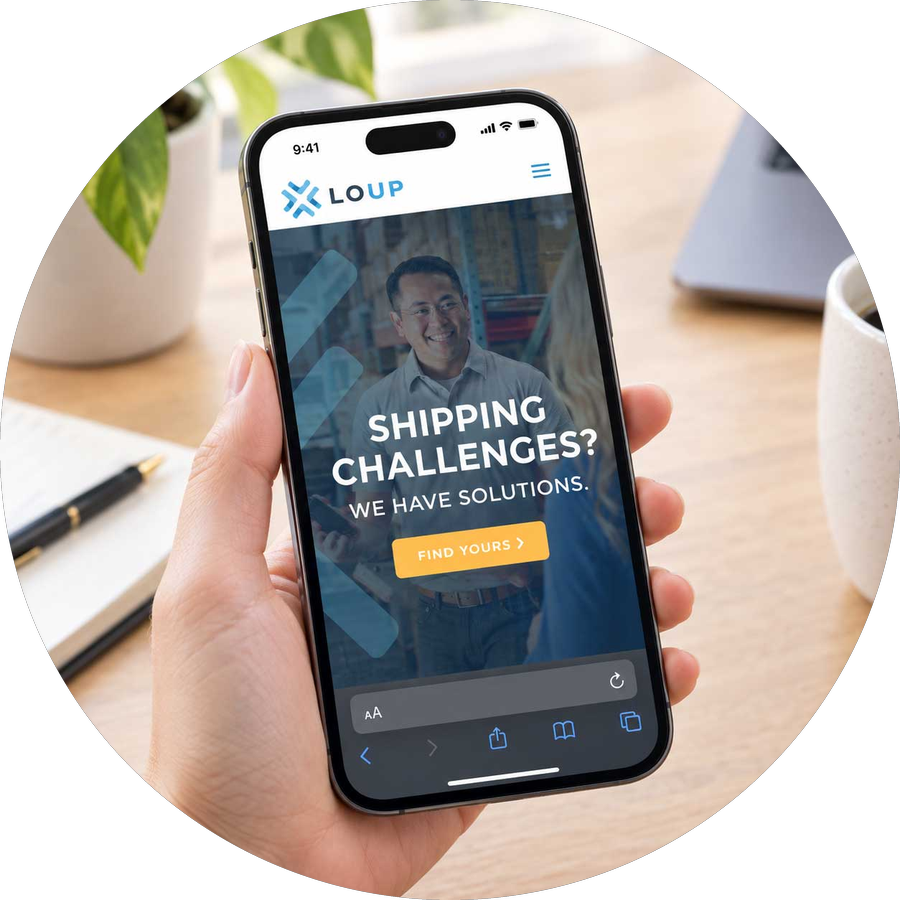
Context
Enterprise relationships are built one project at a time. Mine with Union Pacific started before my studio did. My independent work for the railroad began in 2013, and what followed was not one engagement but a series of them, over years, as UP kept finding the next thing for me to build.
What turned that into years of work was not any single site. It was that each project shipped, performed, and was easy to work on, so the next call kept coming.
What I delivered
- The origin corporate work (2013 to 2014): the responsive redesign of up.com and a redesign of their internal employee site, built with UP's own corporate design team
- Three subsidiary websites, strategy, design direction, and front-end build: ShipCarsNow (2015), UPDS (2016), and Loup Logistics (2018)
- A repeatable way of working across the family: the same documented build method applied to each site, built fresh every time with its own design assets (a shared method, not shared code or components between brands)
- A measurable result on Loup: organic traffic up about 100% three months after launch
The full story: how the trust compounded
Origin: UP's main site (2013 to 2014)
My relationship with Union Pacific predated my studio. The year before I went independent, I'd worked on the railroad's 150th-anniversary kiosk while at What Cheer. When What Cheer wound down its client work to pursue another opportunity, my boss, who owned What Cheer, introduced me to the railroad, and I carried the relationship into my own studio. That work began in 2013 with a couple of early projects, a Facebook trivia app for the railroad and, the one that anchored the relationship, the responsive redesign of up.com, their main site, which I built alongside their corporate design manager Susan. A redesign of their internal employee site followed in 2014. That corporate work isn't shown here.
Being handed a Fortune 500's main site as a young studio is not a small thing, and it's what every later project grew from.
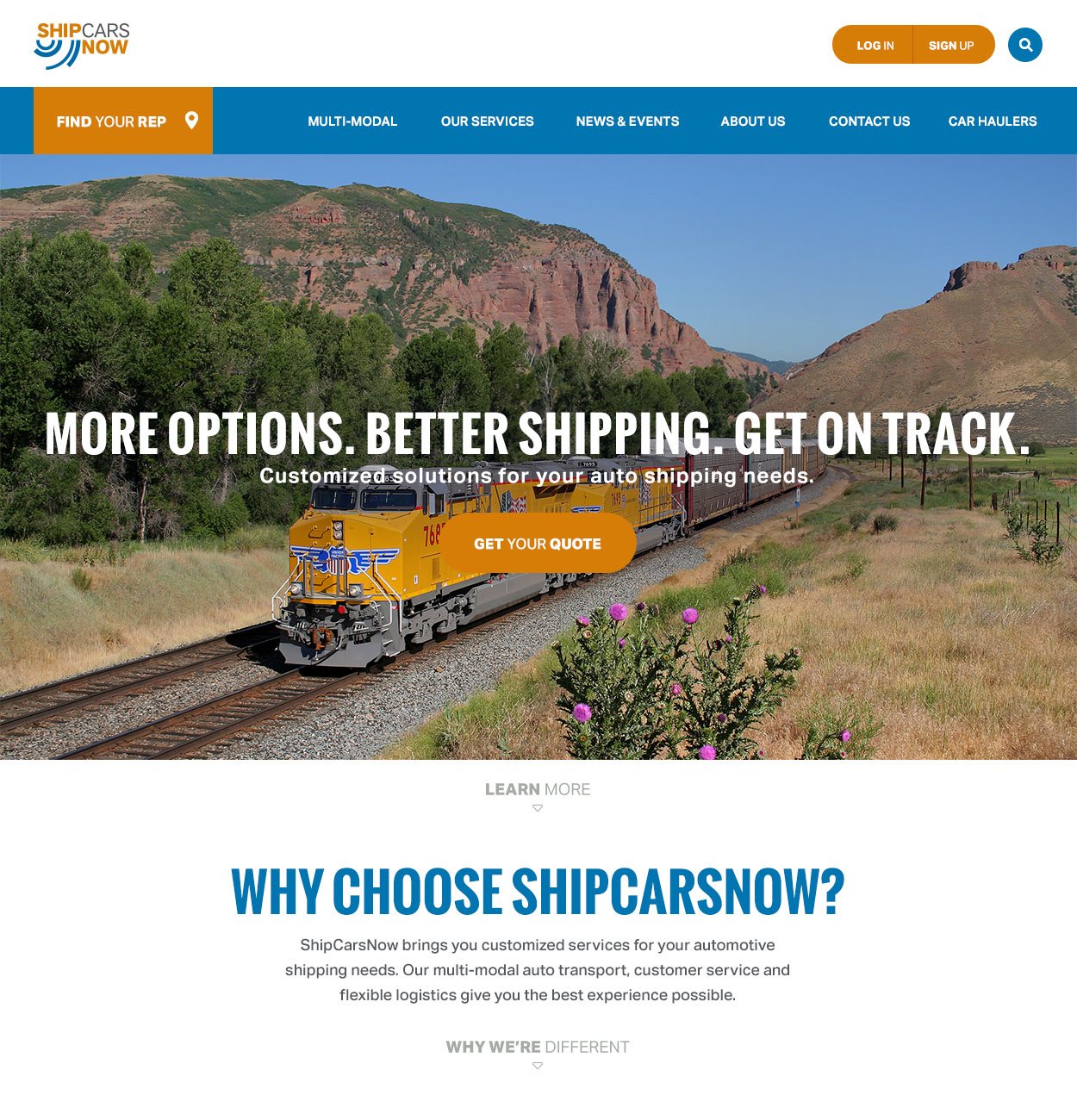
ShipCarsNow (2015): a repositioning, not just a redesign
When UP's subsidiaries needed sites, the work came to my studio, Skwintz, with Hannah, a designer on my team, owning the visual design and me leading strategy, art direction, and the front-end build. ShipCarsNow came first. A rebrand had left the site off-brand, and the business was shifting focus from car dealers to high-volume marketers, so I built the strategy before the pixels: a target persona (execs new to rail, frustrated with truck cost and capacity), a competitive analysis of the other auto-transport players, and the core message that became the site's spine, that ShipCarsNow's multi-modal option, rail and road, was the thing no competitor could match.
Josh, our copywriter, drafted it; I set the direction and built the site around helping a customer find the right shipping solution. Shelley, UP's customer communications lead and my main contact across these projects, put it this way: "You're very talented and easy to work with. You served as a guide for us, always leading us to the best place for our goals."
UPDS (2016): built for their team to run
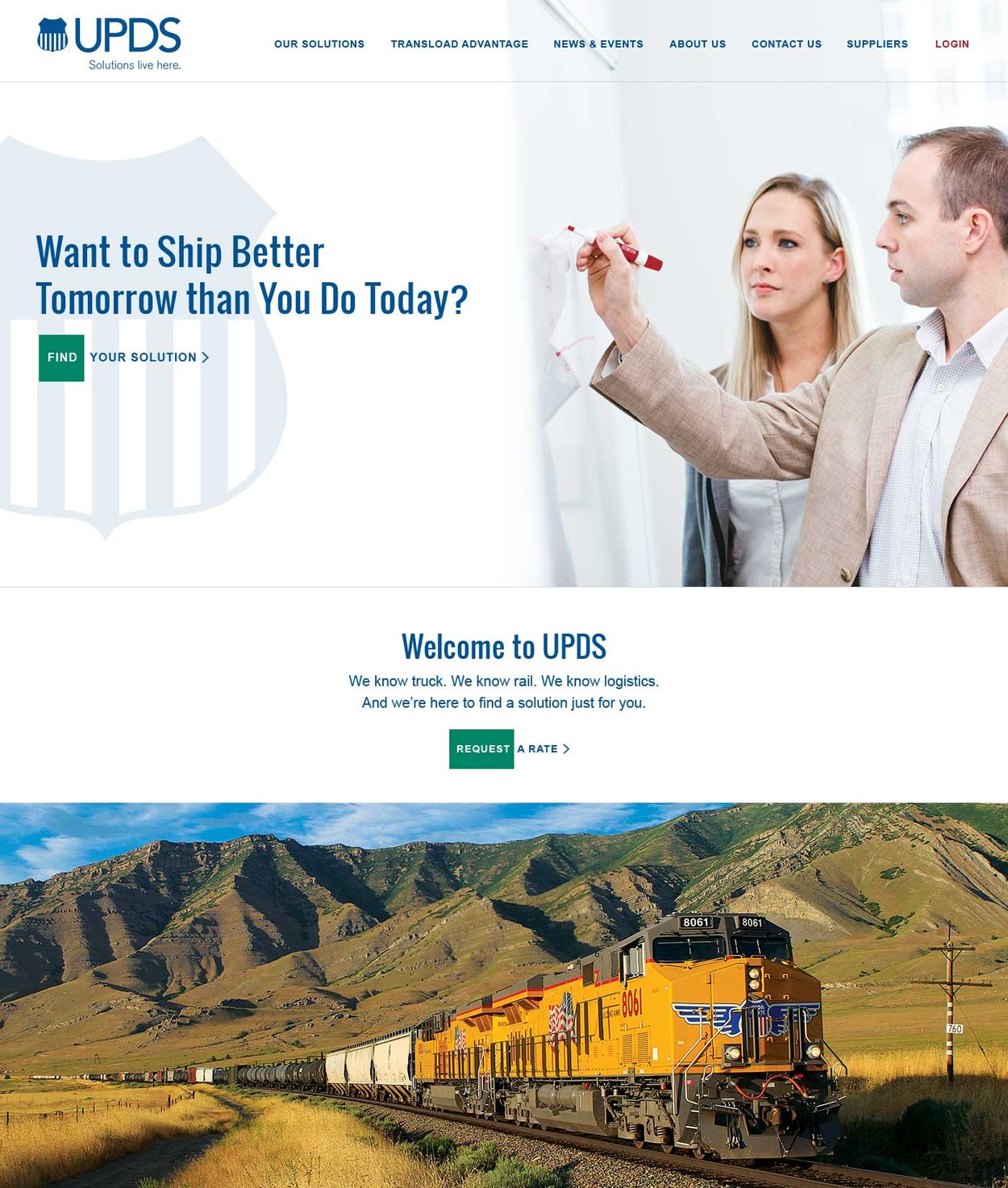
UPDS was a full responsive redesign, and the one where the playbook took shape. I co-ran the project with Shelley and led the kickoff itself, building the site around two goals: educate visitors who often arrived knowing nothing about UPDS, and drive them to "get a rate."
The front end was a reusable, widgetized component system, shared header and footer, no page-specific class dependencies, tuned for mobile, and I handed it off as documented HTML with a tutorial on the class-name system, so their own developers could spin up new pages without me. It shipped cross-browser down to IE8, with a custom icon set and the sales-rep contact flow. The photography was their own: UPDS ran a custom photoshoot for the site, and I put together the goal sheet that steered it, the kinds of shots we needed, the color direction, and reference examples to shoot against. Years before I'd have said "design system," the instinct was already there: leave the client something their team can run.
Loup Logistics (2018): the flagship, and the number
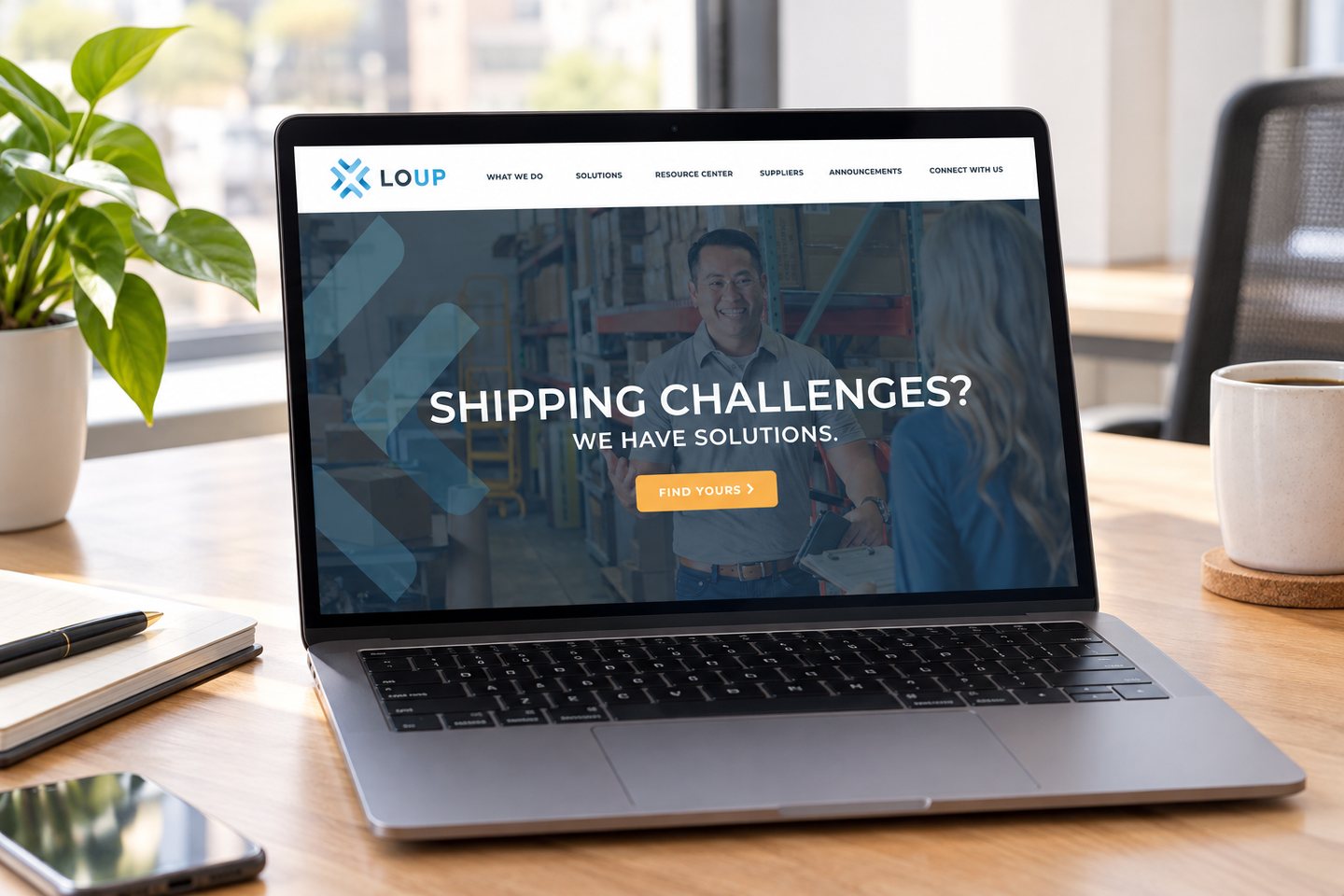
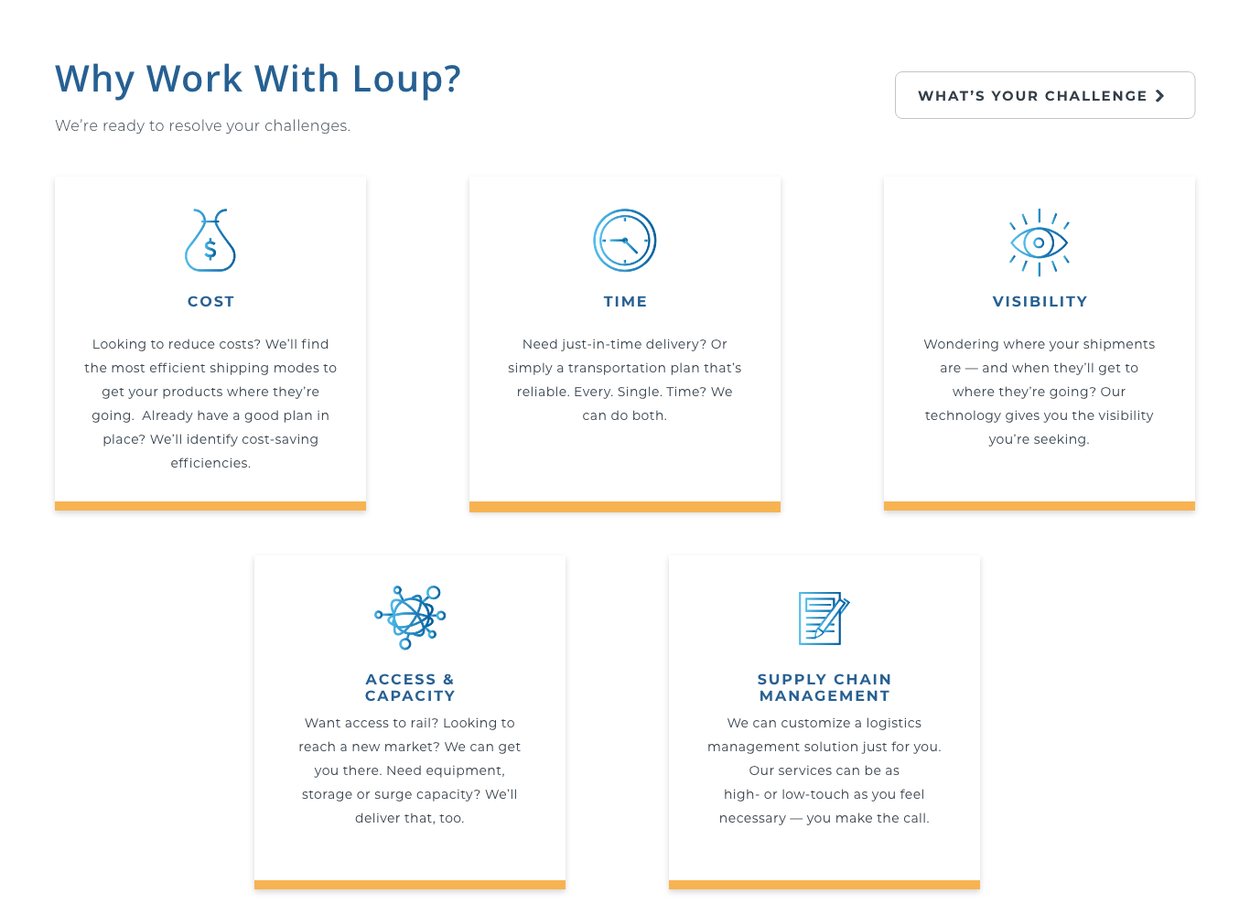
When Union Pacific consolidated its subsidiaries, Loup became the new flagship logistics brand, and the most ambitious build of the three. It opened on "why before what," problems before solutions: a homepage built around "what is your challenge" and a "find a solution" call to action. Its centerpiece was a custom interactive service map, layered and toggleable across transloading, railport, intermodal, and cold-connect locations, hundreds of them spanning the US, Mexico, and Canada.
By now the approach was a true playbook, so I brought the same method I'd proven on UPDS, built fresh here, which is part of why it came together as cleanly as it did. This is the one with a number attached: three months after launch, organic traffic was up about 100% and contact-page visits had climbed. And it's still live today, years on, the same site I built in 2018.
Outcome
The clearest single metric is Loup's traffic. But the truer outcome is the shape of the whole thing. A Fortune 500 railroad knew my work from its 150th-anniversary kiosk in 2012, hired my new studio for its main site in 2013, and kept hiring me across its corporate site and three of its subsidiary brands through 2018, all across its own changing cast of contacts, Susan and Tim early, then Shelley, and a new team still reaching out to me for more years later.
The trust outlasted the individual people who first extended it, which is the difference between one client who likes you and an institution that keeps coming back. In enterprise work, that is the outcome that matters most.
Reflection
What I'm most proud of
That they kept coming back, and that the process held up across subsidiary after subsidiary. No single project was a moonshot. Each one shipped, performed, and was easy to work on, and running that same reliable process from one brand to the next is what turned a couple of small early projects into years of repeat work across the UP family. That is the real lesson I took from Union Pacific: enterprise trust compounds when the work is dependable enough to build a habit on.
What I'd change
Capture baseline numbers on every site at launch the way we happened to on Loup, so the performance story is documented across the board, not just on the one project where we caught it.
Work Notes
Occasional write-ups on what I'm learning as I build.
-
September 2026
I was teaching designers to build websites. It turned out to be bigger than that.
Five years of mentoring career-changers taught me that coding is really just learning the dance of problem-solving.
Read the full article -
June 2026
Bringing my son's video game sketches to life with AI
My son has an amazing imagination. He also loves video games. Today we brought his own video game to life.
Read the full article -
May 2026
What Happens When Your Designer Has Never Used the Internet
My 8-year-old designed his own progress bar. It's so much better than what I was planning.
Read the full article