Case Study Email Systems & Development
From handoff to a system a team could run
An email template rebuild came to me partway through. I was brought in for my Adestra experience, picked it up where it stood, worked through the architecture decision the whole system turned on, and shipped one governable, team-run template.
Context
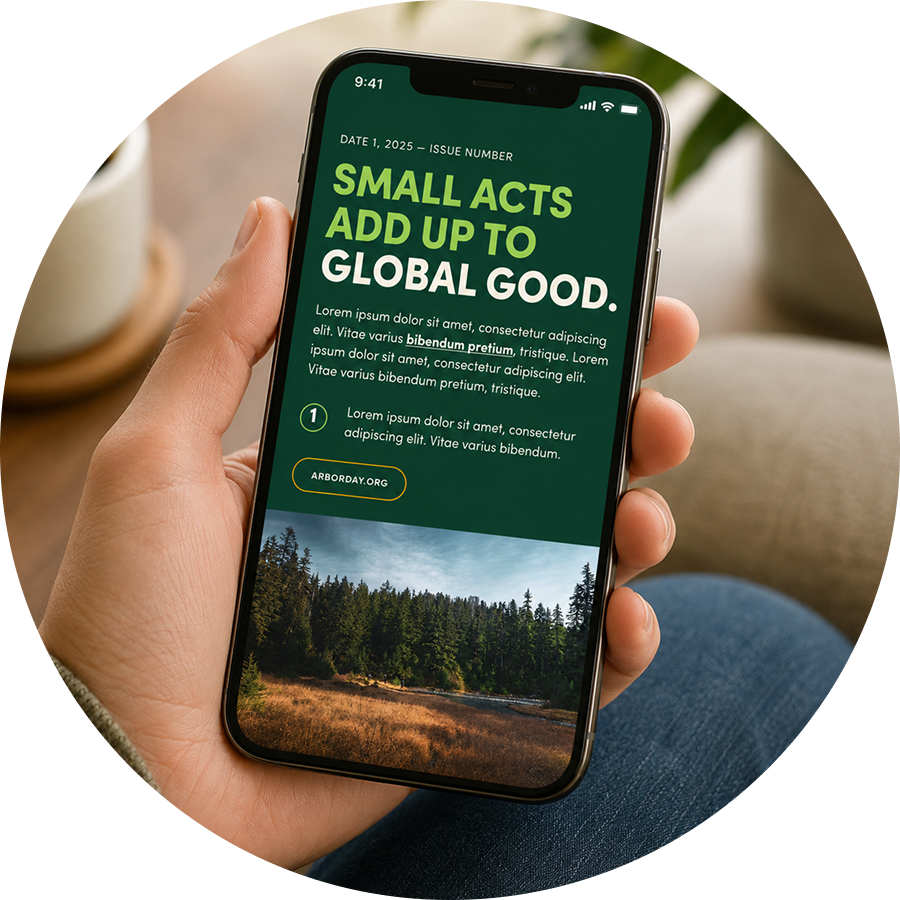
The Foundation had rebranded about six months earlier, and the old email template had gone rigid: off-brand, and missing the components they needed as they pushed toward new kinds of content. Email is a primary channel at this scale, with lists ranging from around 100 to well over 100,000 recipients, so they set out to rebuild the whole template system in Adestra, with more layout options and functionality than the old one allowed.
By the time the rebuild reached me, it had already been through a couple of stages. How it got there is the start of the story.
What I delivered
- One integrated, editable Adestra email template
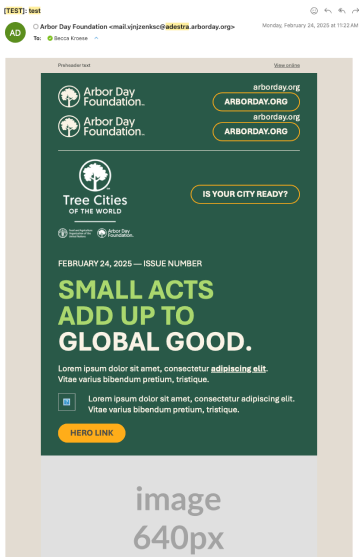
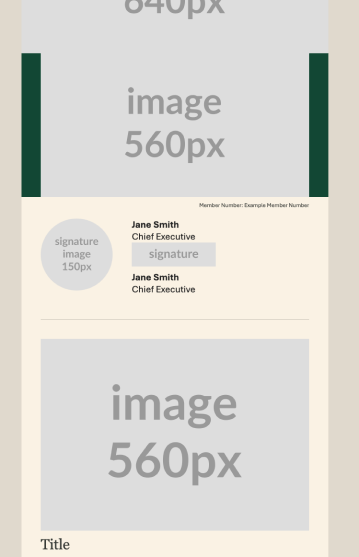
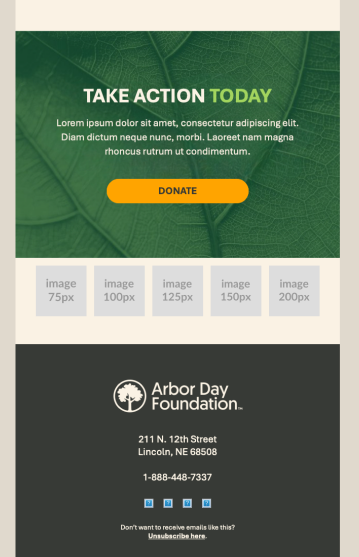
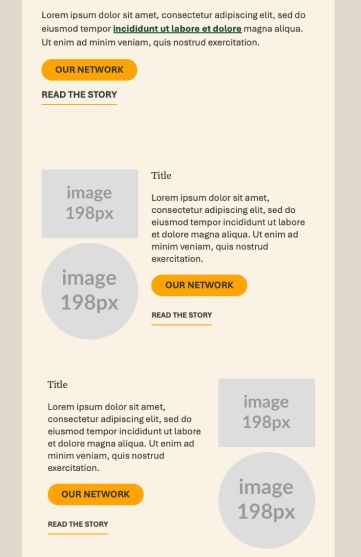
- The component build re-architected around a clear model: pick background, then block, then element
- The missing block options filled in, plus new blocks I designed (Jobs, a programs badge, a lift-note block)
- A published Figma component library in Arbor Day's account that any future designer can reuse
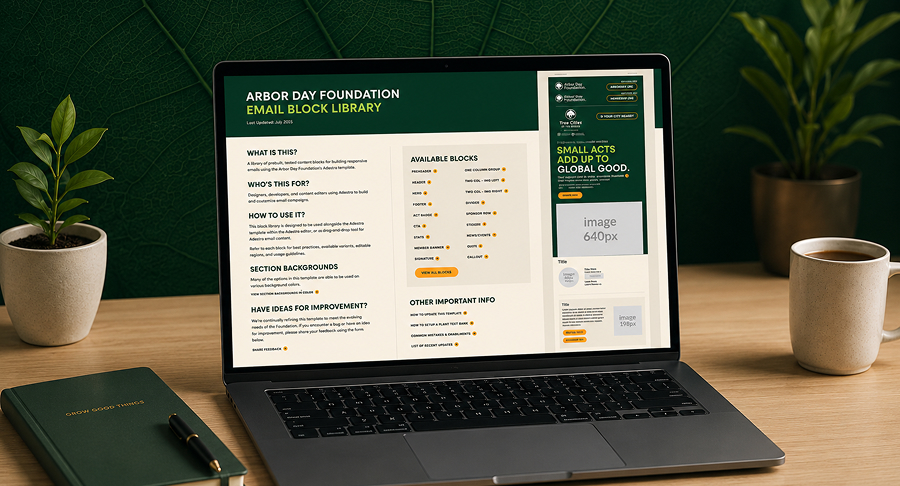
- A living block-library guide built off those Figma components (previews stay visually in sync when a component changes), with how-tos and common-mistake guidance
- Version control for the template (an Azure git repo) for safe rollback before any change
- A bug-and-enhancement intake form to replace the previous scattered feedback process
- Staff training and the rollout plan
The full story: a handoff, and the decision it turned on
How it reached me
The project started as a template redesign to match the brand refresh, with a wish list of new layout options and functionality on top. A contract designer the Foundation had brought on laid the groundwork, both the new design and an early build in Adestra. When his contract wrapped, it was handed to me.
At that point, it needed someone who could carry all three at once: the design, the front-end build, and Adestra itself, which I'd been working in for years. That combination is the whole reason it landed with me.
Picking up the build
With the build in my hands, I reworked the Adestra setup, closed the gaps between the build and the design, added the remaining options, and pulled everything into one integrated template on a clear model: pick a background, then a block, then an element.
The platform fought back
The hard part was never the blocks. It was the platform. Adestra does let you mix and match blocks, but within fairly limited options. We wanted more range than that: enough flexibility for a non-specialist team to compose real, varied emails on their own. Adestra fought me the whole way as we pushed it past its comfortable set of options. Every option we added made the email composition menu longer and more tedious to navigate, and getting it all to work correctly bloated the template a little. So the job wasn't just building blocks. It was making them compose reliably, and stay usable, in a tool that wasn't built to stretch this far.
The architecture was the real fork
How granular to make the blocks was the decision the whole system turned on. I could have decided it alone. I deliberately didn't, and worked it through with the Foundation's creative director, so the people who would live with it owned the tradeoff with me. We landed firmly on the restrictive side: locked, purpose-built blocks that keep a non-specialist team on-brand by default, with a small set of generic full-width primitives (image, text, button, headings) for the layouts that needed to stay open.
Built for the system's life
I set up version control for safe rollback, published the Figma component library in the Foundation's own account so future designers build from shared components, tied a block-library guide to those live components, and replaced scattered feedback with a structured intake form that quickly earned its place by catching issues that would have slipped through chat.
Training the teams
Rolling this out meant getting several different teams inside the Foundation comfortable building with the system, not just handing over a file. I organized and planned the sessions, and I ran them: walking each team through the block library and training them on the template itself, so the people who would use it day to day could build confidently on their own. A PM coordinated logistics; I led the sessions. Enablement was the deliverable here, not an afterthought, because a template only holds if the people using it know how it is meant to work.
Outcome
The system shipped: governable, documented, built on a clear model, with a team trained to run it. The win was getting there, taking an in-progress rebuild and turning it into one coherent template.
It ran about six months before the Foundation moved to Salesforce Marketing Cloud. Email code doesn't carry between platforms, so the system didn't move with them. The value was shipping it clean and leaving the team a documented system they could run without me.
Reflection
What I'm most proud of
Where the block-library guide ended up. I built it for the team making the emails, but it turned out just as useful for the people planning the content, and it spread to other teams I hadn't built it for at all. A system that quietly helps people you didn't design it for is the best kind of win.
What I'd change
I'd force the architecture and platform questions before anyone builds, and make the case for why they matter sooner. I'd also tokenize the brand values now, so the next rebrand is a swap rather than a hand-edit.
Work Notes
Occasional write-ups on what I'm learning as I build.
-
September 2026
I was teaching designers to build websites. It turned out to be bigger than that.
Five years of mentoring career-changers taught me that coding is really just learning the dance of problem-solving.
Read the full article -
June 2026
Bringing my son's video game sketches to life with AI
My son has an amazing imagination. He also loves video games. Today we brought his own video game to life.
Read the full article -
May 2026
What Happens When Your Designer Has Never Used the Internet
My 8-year-old designed his own progress bar. It's so much better than what I was planning.
Read the full article